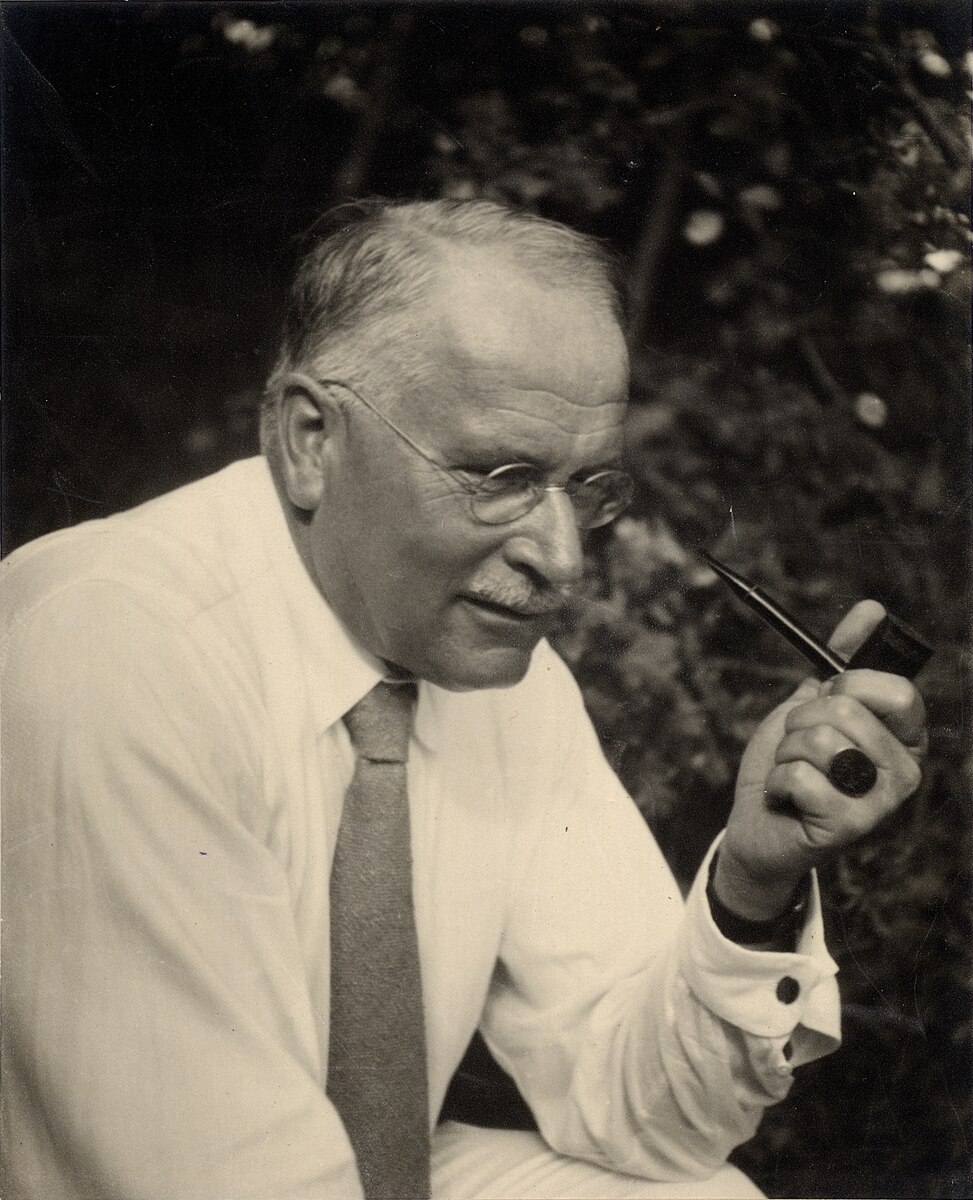
century. As the founder of analytical psychology, Jung introduced groundbreaking concepts such as the collective unconscious, archetypes, psychological types, and individuation. His work expanded the study of the human psyche beyond personal experience to include myths, symbols, religion, art, and dreams shared across cultures.
Jung’s ideas have had a lasting impact not only on psychology, but also on literature, philosophy, anthropology, and the arts. His writings continue to inspire readers seeking a deeper understanding of the self, the unconscious, and the symbolic dimensions of human life.
كارل غوستاف يونغ (1875–1961) طبيب نفسي ومفكر سويسري، ويُعدّ من أبرز أعلام الفكر النفسي في القرن العشرين. أسّس مدرسة علم النفس التحليلي، وطرح مفاهيم محورية غيّرت فهم الإنسان لذاته، مثل اللاوعي الجمعي، والنماذج الأصلية (الأركيتايب)، والأنماط النفسية، ومسار التفرد. وقد وسّع يونغ مجال علم النفس ليشمل الأساطير والرموز والدين والفن والأحلام بوصفها تعبيرات مشتركة في التجربة الإنسانية.
لم يقتصر تأثير يونغ على علم النفس فحسب، بل امتدّ إلى الأدب والفلسفة والأنثروبولوجيا والفنون. ولا تزال أعماله حتى اليوم مصدر إلهام للباحثين والقراء الساعين إلى فهم أعمق للنفس البشرية، وللعلاقة المعقّدة بين الوعي واللاوعي والمعنى.